Certification Switzerland
This page applies to Switzerland and Liechtenstein. There is a separate page for Germany. The product standards and the MID apply in both countries and are therefore listed on both pages.
General product standards and EU regulations
RED - Radio Equipment Directive and EN 18031
The Radio Equipment Directive must be met by all devices that have interfaces with wireless connections and are intended to be offered in Switzerland or the EU. It covers, for example, compliance with signal strengths, interference emission and interference immunity of Wi-Fi, 4G and Bluetooth modules. It also covers functionalities and the security requirements for these modules and products.
The RED (EU) 2022/30 is currently being extended by Articles 3.3 d, 3.3 e and 3.3 f. These address the aspect of cybersecurity for the network and protection against data theft / data manipulation and hacking.
Since 01.08.2025, the standard EN 18031-1, -2, -3 can be used to meet these supplementary RED articles.
smart-me AG develops all of its products in accordance with EN 18031.
This includes, for example, the following points:
-
Encrypted, authenticated communication from the device all the way to the cloud.
-
Secured and separated areas of the firmware for measurement, communication and display.
-
Immutability of the firmware for the measuring hardware.
-
No unnecessary communication channels enabled by default.
-
Use of advanced cryptographic chipsets for generating and storing cryptographic keys.
-
Resilience against external attacks such as DDoS attacks.
Product standards in general
Product standards generally describe the framework to be met with regard to EMC, safety and functionality of a product. For almost all products there is a defined standard that can be used during development. However, the standards cannot always be applied precisely to a given product. In some cases, several product standards must be met at the same time.
The product standards applied are listed on the product's certificate of conformity.
Measuring Instruments Directive (MID) - Certification
In the conformity assessment procedure, a designated body checks whether the measuring instrument or the manufacture of the measuring instrument meets the legal requirements. The conformity assessment is carried out by the designated body on behalf of the manufacturer of the measuring instrument. The manufacturer then issues the declaration of conformity for the measuring instrument with regard to compliance with a legal standard.
If the measuring instrument is subject to the Measuring Instruments Directive 2004/22/EC (electricity, heat, water, cooling or gas meters), the conformity assessment body must additionally be notified by the EU Commission.
Such measuring instruments can be recognized by the "CE" or "CH" marking in combination with the metrology marking "M".
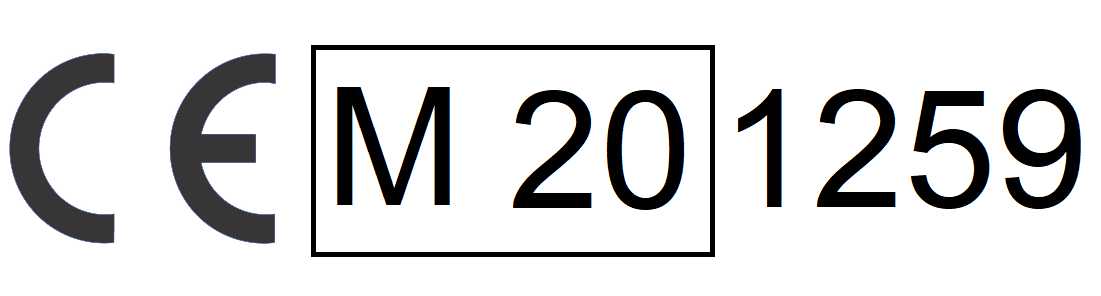
Example: CE M 20 (year of verification) 1259 (verification body)
Meter certifications in Switzerland
This section summarises the regulations on legal metrology and MID that apply in Switzerland. You can find the ordinance here: FDJP Ordinance on Measuring Instruments for Electrical Energy and Power (EMmV)
Load profile certification
The CH load profile certification (CH-Lastgang) allows the user to bill based on meter readings taken at intervals of at least 15 minutes. This certification requires additional technical capabilities and covers the signing, data storage and transmission paths (security, encryption) of the data.
The 3-Phase Meter Telstar, 3-Phase Meter Telstar CT and Pico EV Charger hold both the MID and the CH load profile certification.
Certifications in an association for own consumption (ZEV)
smart-me technology covers both of the following variants:
Variant 1: ZEV billing using meter readings and a single or dual tariff (MID required)
A ZEV can be billed using the opening and closing meter readings (on reference dates). For this, the legislator only requires a measuring device with MID certification. Tariff differences with a peak tariff and off-peak tariff are only possible with an external signal; otherwise a single tariff can be used.
Advantages:
-
The measuring device only needs to be MID certified. (smart-me 3-Phase Meter Telstar)
-
Simple billing of the meter readings on reference dates.
-
A simple software solution is possible, or it can even be done manually.
Disadvantages of a single tariff:
-
Costs can only be charged according to consumption volumes.
-
Tenants cannot optimise their costs by carefully using electricity at the right time.
-
No targeted use of solar power by tenants. (Lower efficiency in internal electricity sales)
Disadvantages of a dual tariff with an external tariff signal:
-
Costs can only be allocated according to consumption volumes in the peak and off-peak tariff using an external control signal. (No solar tariff)
-
Limited cost optimisation by tenants through careful use of electricity at the right time.
-
No targeted use of solar power by tenants. (Lower efficiency in internal electricity sales)
Variant 2: ZEV billing using load profiles and a multi-tariff system (MID and CH load profile certification required)
A ZEV can be billed using load profile data (15-minute intervals). This variant unlocks the full scope of a ZEV with all its benefits for tenants and ZEV owners.
Advantages:
-
Enables billing with different tariffs. (Off-peak, peak, solar tariff)
-
Allocates the costs incurred to whoever caused them. (Also takes into account the availability of solar power with a special tariff)
-
Tenants can optimise their own costs and focus on solar power.
-
Self-produced solar power can be sold internally more effectively, improving the ROI.
-
Differentiated electricity tariffs make the property more attractive to tenants overall.
Disadvantages:
-
Requires MID and load profile certified measuring devices. (smart-me 3-Phase Meter Telstar)
-
Requires capable software to store, evaluate and process the load profile data.
Certifications for charging stations in Switzerland
Charge points in a rental relationship:
For charging station hardware used in a rental relationship, Switzerland generally requires the same as for standard meter hardware:
-
MID certification to bill the recorded energy at a single tariff.
-
CH load profile certification + MID certification to bill the recorded energy at a multi-tariff (peak, off-peak, solar tariff).
Charge points in public areas with different users:
- In Germany, the legal situation has been defined and requires compliance with legal metrology (Eichrecht). (see Certification Germany). In Switzerland, there are currently no legal regulations defined regarding MID conformity.
Note: The markings on the right are mandatory symbols that must be visible on the hardware at all times in order to hold MID, load profile or legal metrology certification.
Mandatory markings on the charging hardware:
MID certification:

CH load profile certification:


Re-verification of MID meters
All information is subject to change and in accordance with EMmV 941.251 (as of 1 January 2018).
Meters
Meters must be re-verified by the Federal Institute of Metrology (METAS) or by an authorised verification body according to the procedure in Annex 7 number 1 MessMV, as follows:
a. Meters with an electronic measuring element: every 10 years (smart-me 3-Phase Meter Telstar)
b. Meters with an electromechanical measuring element: every 15 years
Transformers (current sensors)
Transformers must be re-verified by METAS or by an authorised verification body according to the procedure in Annex 7 number 1 MessMV, as follows:
a. Inductive transformers with a non-split core: every 60 years
b. Transformers other than those under letter a: every 2 years.
Extending the validity of an existing verification
Regardless of the manufacturer, the certification is valid for 10 years.
Verification by lot (statistical testing procedure)
SAK and CKW re-verify smart-me meters by lot for a fee. If you are interested, please contact the heads of the respective verification bodies directly. In practice, most meters in a ZEV are not re-verified but are depreciated over the years and replaced with new meters at the end of their service life.
Testing by lot requires an initial sample check after 5 years and then periodically every 5 years.
If METAS approves the lot in accordance with letter E number 6, the meters of the approved lot are considered verified for a further 5 years, provided they remain subject to the statistical testing procedure.
Consequence
If the verification of the devices expires and a lot verification procedure is not possible, the meters must be replaced with new devices after 10 years.
MINERGIE certification with smart-me
MINERGIE certification requires a suitable measuring system for the required monitoring.
smart-me is a certified module according to Minergie and can be used directly to fulfil the monitoring requirements.
The smart-me system also has the automated interface for transferring data to the Minergie database for the Minergie Monitoring + extension.