Tenant electricity with non-participants
Individual parties do not participate
This structure applies to metering concept MKD3: Behind the building connection, there are both tenant electricity participants and parties who continue to purchase their electricity directly from the energy supplier.
The difference from the standard structure is not the shape of the folder tree, but who is billed within it and which meters form the balance. Participation is not a property of the meter but of the contract — the structure must be able to reflect this, even if a party switches during the year.
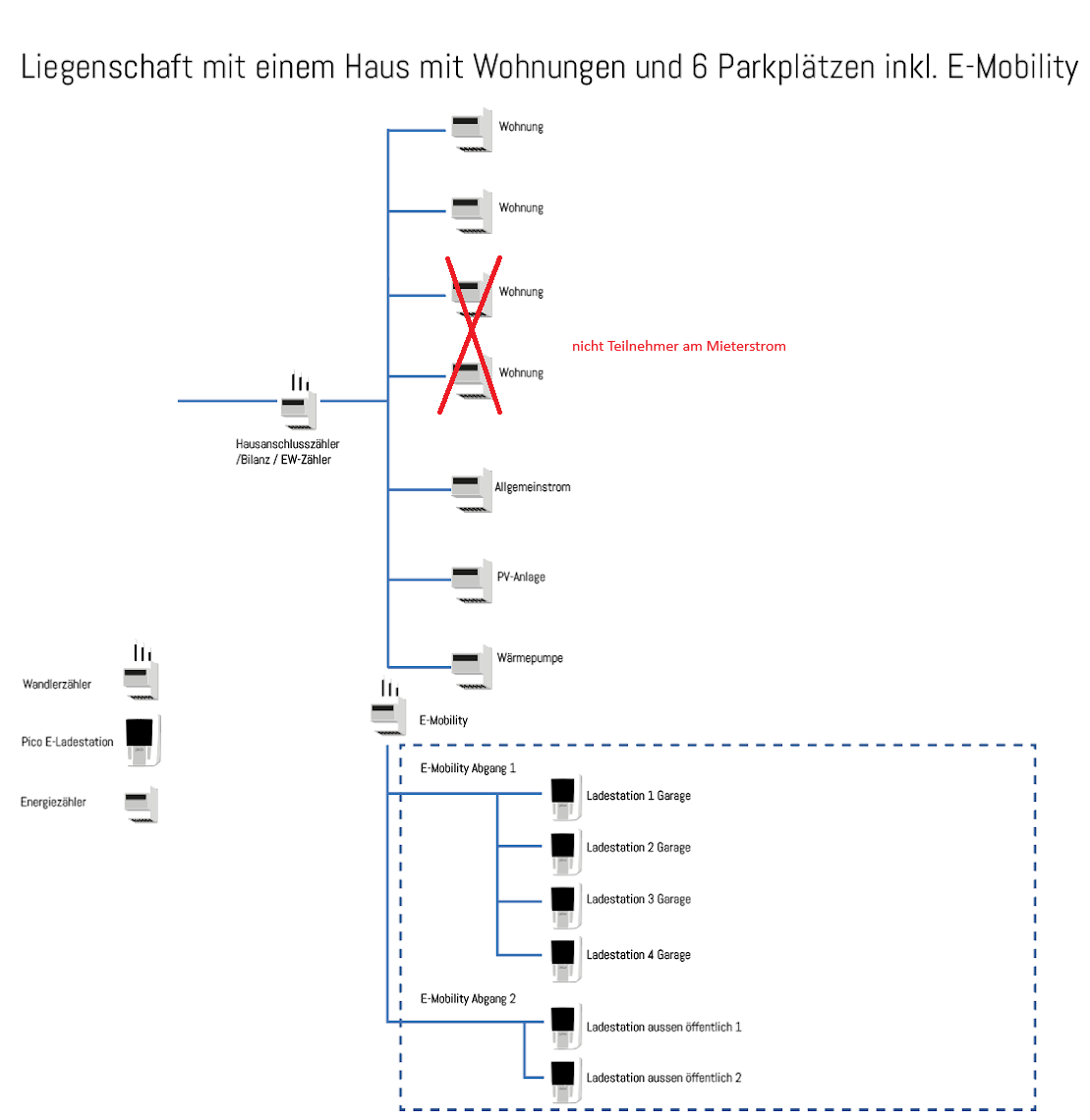
Folder structure
-
1 folder for the property (e.g. Hauptstrasse 7 tenant electricity)
-
1 subfolder per participating billing unit
-
1 subfolder "General" for the stairwell, outdoor lighting and similar outgoing circuits
-
1 subfolder "Non-participants" for the parties outside the tenant electricity scheme
-
1 subfolder "Technical meters" for everything that is distributed proportionally
-
The "Non-participants" node is not billed. It exists so that the meters of these parties remain visible and can be moved without restructuring if a contract changes.
Assigning the meters
As with the standard: assign directly to the billing unit if the invoice recipient bears the entire consumption — otherwise to the "Technical meters" node.
Production and balance — this is where the difference lies
With MKD3, the building connection meter is not referenced as the balance meter. It also measures the consumption of the non-participants and would distort the balancing.
Instead:
-
Balance — all participating apartments, parking spaces and the production
-
Production — all production meters of the solar system
-
Building connection meter — only for later verification, not used in the tariff calculation
What this means for billing
With MKD3, the total of the grid electricity sold does not match the energy supplier's invoice, and the feed-in quantity does not match the value of the building connection meter. This is expected: the remuneration for non-participants is made once per billing period.
So do not expect the figures to match down to the kilowatt hour — the check works differently than with the standard metering concept.
Charging stations
Create a separate billing unit for each charging station; do not assign it to the apartment. If a non-participant has their own charging station, it belongs under the "Non-participants" node.
Finally, create the alarms for a connection failure
This way you notice early when a meter fails and keep the gap in the measurement data small.